
Fluffy Lemon Ricotta Pancakes Recipe: Light and Zesty Brunch
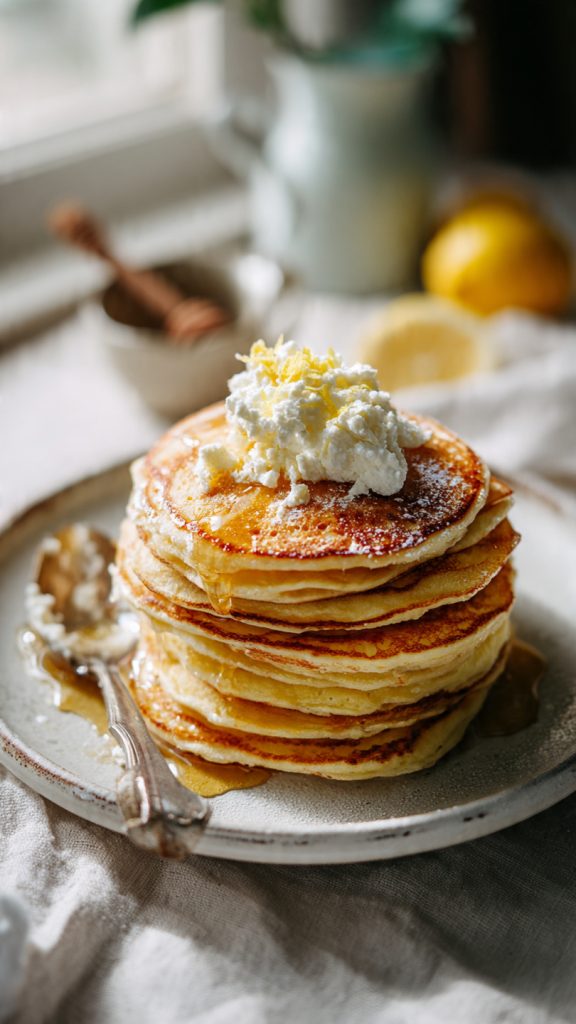
Imagine a stack of pancakes that’s delicate yet tender, bright with lemon, and just rich enough to feel special without weighing you down. That’s the magic of Lemon Ricotta Pancakes. They’re fluffy in a way standard pancakes can’t quite achieve, thanks to creamy ricotta and a light whip of egg whites. The lemon zest and juice lift everything with a fresh, sunny flavor that pairs beautifully with berries, a dusting of powdered sugar, or a drizzle of warm maple syrup. If you’re looking for a breakfast that feels like a little celebration, this is it. In this guide, I’ll walk you through each step, share my favorite tips, and help you create pancakes that are golden, fluffy, and downright irresistible.
- What Makes These Lemon Ricotta Pancakes Irresistible
- What You’ll Need: Ingredients for Lemon Ricotta Pancakes
- Your Step-by-Step Path to Lemon Ricotta Pancakes
- Time & Prep Details at a Glance
- Tips for Guaranteed Pancake Success
- A Quick Nutritional Snapshot
- Your Questions, Answered
- A Few Final Thoughts
What Makes These Lemon Ricotta Pancakes Irresistible
These pancakes give you the best of both worlds: comfort and elegance. The ricotta makes them luxuriously soft and tender, while lemon zest adds a bright, aromatic lift that wakes up your senses. They’re impressive enough for a weekend brunch yet easy enough for any morning you want to treat yourself. With a few simple techniques—like gently folding in whipped egg whites—you’ll get a rise and fluff that’s hard to beat. Expect pancakes that cook up golden on the outside, moist on the inside, and wonderfully fragrant, especially when topped with berries and a touch of syrup.
What You’ll Need: Ingredients for Lemon Ricotta Pancakes
- All-purpose flour (1 cup / 125 g) — Provides structure; the base that holds everything together while still keeping the crumb tender.
- Granulated sugar (2 tablespoons) — Adds light sweetness that complements the lemon without overpowering it.
- Baking powder (1 teaspoon) — The main leavener for lift and fluff.
- Baking soda (1/2 teaspoon) — Reacts with the lemon juice to boost rise and tenderness.
- Fine salt (1/4 teaspoon) — Balances sweetness and amplifies flavors.
- Whole-milk ricotta (1 cup, well-drained) — The secret to a custardy, ultra-moist crumb. Drain if it’s watery so the batter isn’t thin.
- Milk (3/4 cup) — Loosens the batter; whole or 2% both work. Start with 3/4 cup and adjust if needed.
- Large eggs (2), separated — Yolks enrich the batter; whites get whipped to give the pancakes lift and airiness.
- Fresh lemon zest (about 1 tablespoon from 1 large lemon) — Where the bright, aromatic lemon essence really shines.
- Fresh lemon juice (2 tablespoons) — Adds a vivid tang and activates the baking soda for extra rise.
- Vanilla extract (1 teaspoon) — Rounds out the citrus with a mellow warmth.
- Unsalted butter, melted (2 tablespoons) — Adds richness and helps with browning; plus more for the pan.
- For serving: Maple syrup, fresh berries, powdered sugar, and extra lemon zest — Optional but highly recommended for a beautiful finish.
Your Step-by-Step Path to Lemon Ricotta Pancakes
- Drain the ricotta if needed. If your ricotta looks watery, set it in a fine-mesh sieve over a bowl for 10 minutes. This keeps the batter from becoming too thin and helps achieve a fluffy, not soggy, texture.
- Preheat the griddle or skillet. Heat a nonstick skillet or griddle over medium heat (about 375°F/190°C if it’s electric). You want it hot enough to sizzle a drop of water, but not smoking. Proper heat is crucial to even browning.
- Combine the dry ingredients. In a large bowl, whisk together the flour, sugar, baking powder, baking soda, and salt. This ensures the leaveners are evenly distributed.
- Mix the wet ingredients (except egg whites). In a second bowl, whisk the ricotta, milk, egg yolks, lemon zest, lemon juice, vanilla, and melted butter until smooth. It’s normal if the mixture looks slightly thick.
- Bring the batter together. Make a well in the dry ingredients and pour in the wet mixture. Stir gently with a spatula until just combined. Stop when you still see a few small flour streaks—overmixing can make pancakes tough.
- Whip the egg whites. In a clean bowl, beat the egg whites to soft peaks using a whisk or hand mixer. When you lift the whisk, the peaks should softly fold over. This is the secret to extra fluff.
- Fold in the egg whites. Using a spatula, fold the whites into the batter in two additions, sweeping from the bottom and turning the bowl. Keep it gentle to preserve the lift you just created.
- Rest the batter (5 minutes). A short rest allows the flour to hydrate and the leaveners to get going. Don’t skip this—those 5 minutes matter.
- Grease and ladle. Lightly butter the hot griddle. Scoop about 1/4 cup batter per pancake, spacing them well. The batter should gently spread but still hold shape.
- Cook the first side. Cook for 2–3 minutes, until you see bubbles forming, edges look set, and the underside is golden. Adjust heat if they brown too quickly.
- Flip and finish. Turn gently with a thin spatula. Cook another 1–2 minutes until the center springs back when touched and the edges are cooked through.
- Hold warm (optional). Keep finished pancakes on a wire rack set over a baking sheet in a 200°F/95°C oven while you finish the batch. The rack prevents sogginess.
- Serve. Stack warm pancakes with berries, a dusting of powdered sugar, and a drizzle of maple syrup. Add extra lemon zest if you love a bolder citrus note.
Time & Prep Details at a Glance
| Prep time | 15 minutes (includes draining ricotta and whipping egg whites) |
| Rest time | 5 minutes (lets the batter hydrate and aerate) |
| Cook time | 12–15 minutes (for 10–12 pancakes, cooked in batches) |
| Total time | 30–35 minutes |
| Yield | 10–12 small pancakes (about 4 servings) |
When are they ready? You’ll know your pancakes are ready when they’re evenly golden on both sides, the centers feel springy rather than wet, and a tester comes out clean. Serve immediately while warm and tender.
Tips for Guaranteed Pancake Success
- Measure flour lightly. Spoon flour into your cup and level it off. Packing flour leads to dense pancakes.
- Don’t overmix. A few small lumps are okay. Overmixing develops gluten and can crush the airy lift from the egg whites.
- Control the heat. Medium heat is your friend. Too hot and the pancakes scorch before cooking through; too low and they dry out without browning.
- Drain the ricotta. If your ricotta is watery, your batter will be loose and your pancakes won’t rise as well. A quick drain makes a big difference.
- Whites help, but aren’t mandatory. Whipped whites give you extra fluff. If you’re short on time, skip the separation and whisk whole eggs with the wet ingredients. Your pancakes will still be delicious, just a tad less airy.
- Rest the batter. Even 5 minutes helps hydrate the flour and keeps pancakes tender.
- Grease lightly. A thin sheen of butter or neutral oil is enough. Too much fat can cause patchy browning and greasy edges.
- Flip once. Wait for bubbles across the surface and set edges, then flip. Multiple flips deflate the batter and toughen the crumb.
- Flavor twists. Stir in 1 teaspoon poppy seeds for a lemon-poppy variation, or scatter fresh blueberries over the batter right after ladling onto the griddle.
- Gluten-free option. Use a 1:1 gluten-free flour blend. If it’s very absorbent, add a tablespoon or two more milk to keep the batter soft.
- Make-ahead tips. Cooked pancakes freeze beautifully. Cool completely, freeze in a single layer, then store in a zip-top bag for up to 2 months. Reheat in a toaster or 325°F/165°C oven until warm.
A Quick Nutritional Snapshot
These values are estimates for 1 serving (about 1/4 of the recipe, 2–3 pancakes), prepared as written and cooked with a light amount of butter on the griddle. Exact numbers vary with brands and portion size.
- Calories: ~360
- Protein: ~15 g
- Carbohydrates: ~34 g
- Total Fat: ~16 g
- Saturated Fat: ~9 g
- Fiber: ~1 g
- Sugars: ~10 g
- Sodium: ~430 mg
Note: Using part-skim ricotta or 2% milk can slightly lower the fat and calories, while whole-milk dairy makes the pancakes richer.
Your Questions, Answered
Can I use part-skim ricotta or cottage cheese?
Yes. Part-skim ricotta works well and yields a slightly lighter pancake. Cottage cheese also works in a pinch; blend it briefly for a smoother texture. Whichever you use, drain off excess liquid so the batter isn’t thin.
Do I have to whip the egg whites?
No, but it helps. Whipped whites create an especially airy texture. If you prefer to simplify, use the whole eggs with the wet ingredients and skip the whipping step. The pancakes will still be soft and flavorful—just a touch less fluffy.
How should I store and reheat leftovers?
Cool completely, then refrigerate in an airtight container for up to 3 days or freeze up to 2 months. Reheat in a toaster or 325°F/165°C oven until heated through. A toaster keeps edges lightly crisp and centers tender.
A Few Final Thoughts
These Lemon Ricotta Pancakes are the kind of breakfast that brings people to the table before you’ve even called them. The citrus perfume in the air, the gentle sizzle on the griddle, and the first forkful—pillowy, warm, and bright—feel like a small celebration of simple ingredients done well. With a little care and a couple of smart techniques, you’ll craft pancakes that are easy to love and even easier to share. Whether you’re dressing them up with berries for brunch or enjoying a quiet stack on a weekday morning, this recipe turns an ordinary moment into something cozy and memorable. Here’s to sunny, lemony mornings and the joy of cooking for the people you love—including yourself.